


Dehydration in Hot Weather: Preventive Tips For safety
Updated: May 21, 2024
As temperatures soar during the summer months, staying hydrated becomes paramount for maintaining health and well-being. Hot weather increases the risk of dehydration, a condition that occurs when the body loses more fluids than it takes in. In this blog, we'll explore the importance of hydration in hot weather, common challenges faced, and practical tips to ensure adequate fluid intake for optimal health and performance.

Importance of Hydration in Hot Weather:
Hot weather poses different challenges to the body's hydration status due to increased sweating and evaporative cooling. When exposed to high temperatures, the body relies on sweating as a primary mechanism to dissipate heat and regulate internal temperature. However, this process can lead to significant fluid loss if adequate hydration practices are not followed.
Symptoms of Dehydration:
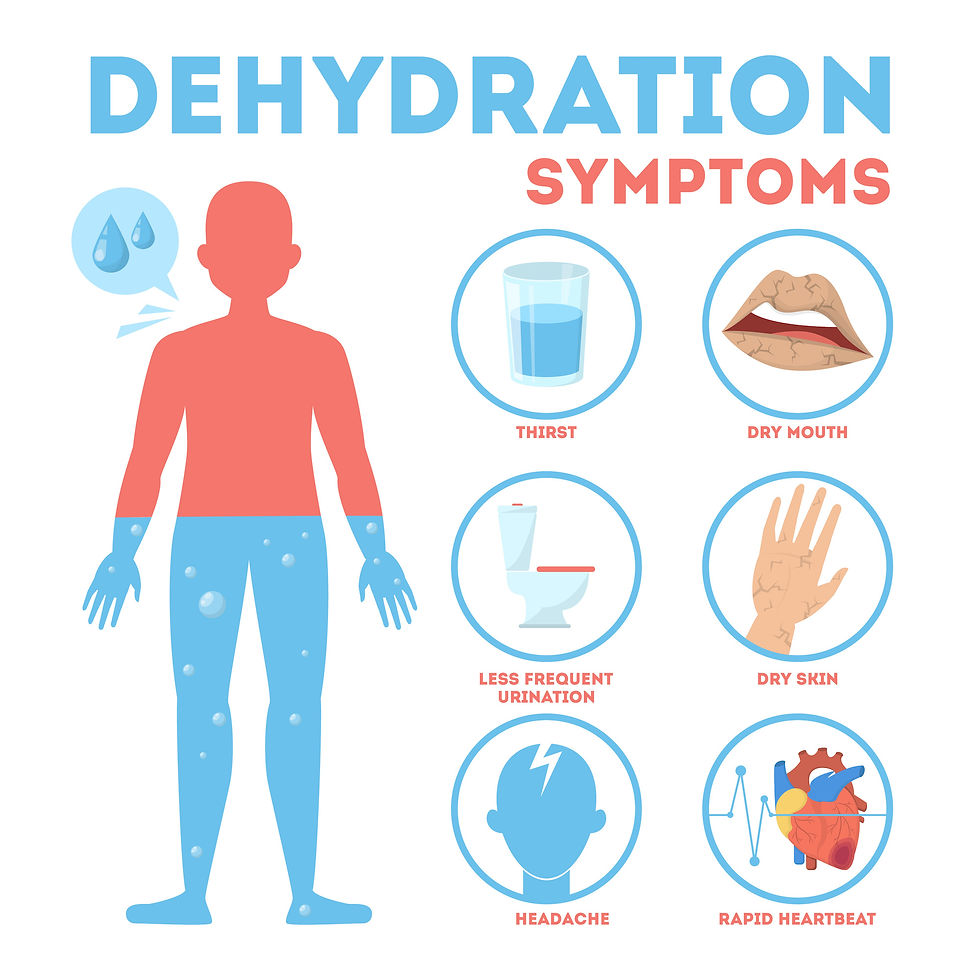
Dehydration in hot weather can occur rapidly and may result in symptoms such as thirst, fatigue, dizziness, headache, and muscle cramps. Severe dehydration can lead to heat-related illnesses such as heat exhaustion or heatstroke, which require immediate medical attention. Therefore, maintaining proper hydration is essential for staying safe and healthy in hot weather conditions.
Practical Tips for Staying Hydrated During Summer:
1. Drink Sufficient Fluids:
The most straightforward way to stay hydrated in hot weather is to drink plenty of fluids throughout the day. Water is the best choice for maintaining hydration, but other options such as sports drinks, coconut water, and fruit juices can also provide valuable electrolytes and nutrients. Aim to drink fluids regularly, even if you don't feel thirsty, as thirst is not always a reliable indicator of hydration status.
2. Monitor the Urine Color for Inspecting Dehydration:
Monitoring the color of your urine can provide valuable insights into your hydration status. In general, lighter urine colors indicate adequate hydration, while darker urine colors may signal dehydration. Aim for pale yellow urine as a sign of optimal hydration. If your urine appears dark, increase your fluid intake accordingly.
3. Hydrate While Doing Activities of Daily Living (ADLs):
Physical activity in hot weather can significantly increase fluid loss through sweat. Therefore, it's essential to hydrate before, during, and after exercise to replace lost fluids and electrolytes. Drink water or sports drinks before starting your workout, take regular water breaks during activity, and replenish fluids post-exercise to aid recovery.
4. Eat Hydrating Food:
In addition to beverages, certain foods can contribute to overall hydration levels. Fruits and vegetables with high water content, such as watermelon, cucumbers, oranges, and strawberries, can help supplement your fluid intake and provide essential vitamins and minerals. Including these hydrating foods in your diet can support hydration efforts, especially during hot weather.
5. Avoid the Consumption of Excessive Caffeine and Alcohol:
Alcoholic and caffeinated beverages can have diuretic effects, increasing urine output and potentially leading to dehydration. While it's okay to enjoy these beverages in moderation, be mindful of their effects on hydration levels, particularly in hot weather. Balance alcoholic and caffeinated drinks with plenty of water to maintain hydration.

Staying hydrated in hot weather is essential for maintaining health, performance, and overall well-being. By following practical tips such as drinking plenty of fluids, monitoring urine color, hydrating before and after physical activity, choosing hydrating foods, and avoiding excessive alcohol and caffeine, you can ensure optimal hydration even in the most sweltering conditions. Prioritizing hydration allows you to enjoy the summer months safely and comfortably, keeping you feeling refreshed and revitalized.


Comments